



Healing Gardens

I remember numerous nature experiences from my childhood. The feeling when I first buried seeds in the earth with my hands, the sweet taste of strawberries I picked myself, my wonder when I saw blue-glittering dragonflies hovering over a pond, the desire to stroke the soft fur of a bumblebee, to see the parachutes of dandelions floating, picking cornflowers at the edge of a field, the scent of the soil after a summer rain, or the feeling of soft moss under my feet.
As children, we intuitively seek out these moments. We explore our environment, are curious and fascinated by everything that grows and lives around us. And we love being right in the middle of it all and feeling that we are a part of nature.
As adults, this intuitive connection to nature is quickly lost. In a world that is becoming ever faster, louder, and more digital, there is little room for nature, silence, and mindfulness. We spend 90% of our time indoors. We stare at screens. We breathe air from air conditioning systems. Obligations, pressure, and hectic schedules come into play. And work environments, like sterile offices, are often anything but connected to nature. Contact with nature becomes a rare luxury, something we treat ourselves to on vacation by the sea or in the mountains, or perhaps during a weekend walk.
Numerous studies demonstrate the significant influence nature has on our health, both physical and mental. Gardens, for example, appeal to all our senses, such as the scent of roses, the sound of rustling leaves, and the various textures, like the velvety surface of Alchemilla.
Just 20 minutes in a park or garden is enough to measurably lower cortisol levels – the so-called 'stress hormone' – and regular contact with nature strengthens our immune system. Particularly impressive: these effects occur even in urban green spaces, which are often only a few square meters in size. A recent meta-analysis from 2023 with over three million participants confirms that people living in an environment with 10% more green space have a 3% lower risk of developing depression.
In 2024, a US research group investigated and confirmed thelink between green spaces in urban areas and the mental health of the population: people in green urban neighborhoods have better mental health than those in grey, densely built-up areas.
A Finnish study (2023) found that people who spend more time in parks or forests take less medication – especially for high blood pressure, asthma, and depression. The researchers see a direct connection between access to green spaces and better physical health.
These are just a few examples. Incidentally, one of the best-known studies on this topic was conducted as early as 1984. The American researcher Roger Ulrich demonstrated that recently operated patients who only had a view of a wall from their hospital room had a measurably higher need for painkillers than a control group who had a view of trees.

Therapeutic gardens, such as Horatio's Gardens or the green spaces surrounding the Maggies Centre in England, the Vitrea Therapy Gardens in Hattingen , or even smaller projects like the gardens of the Löwenherz Children's Hospice in Syke near Bremen (Germany), represent the pinnacle of beneficial gardens. They now exist in some hospitals, healthcare facilities, and senior living institutions. While still isolated projects, they already boast impressive success stories. Whether for people with dementia, for mobilizing those with physical limitations, or for emotional well-being, therapeutic gardens and the involvement of garden therapists will hopefully one day become commonplace.
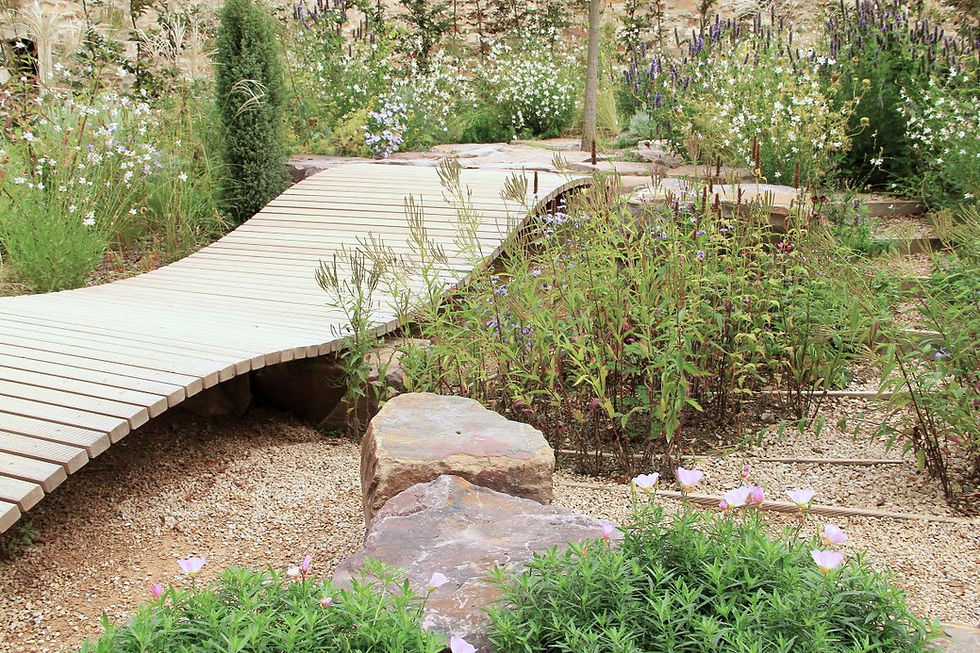
As a garden designer, I want to encourage people to incorporate approaches from therapeutic gardens into their private and business outdoor spaces. Every bit of greenery in our surroundings benefits both us and the environment (think climate adaptation and biodiversity). Even the smallest outdoor space can be transformed into a green oasis with often minimal effort. Sometimes it's just a newly planted tree in the middle of the garden, its rustling leaves visible from the sofa or desk, perhaps even blocking the view from the neighbor's windows. Or winding paths framed by flowering perennials through a small garden, inviting you to stroll and explore after the hustle and bustle of the day. Or the scent of lavender, rosemary, and thyme on the balcony as you sit outside with a book in the evening sun or celebrate summer with friends.
For me, gardens and my garden design consultations are therefore not just about knowing the positive effects, but about experiencing them firsthand. It's about creating a soothing experience that can become an integral part of everyday life. It's always such a joy to see how much people flourish when their outdoor spaces – however small they may be – suddenly become a green, safe, and vibrant extension of their indoor spaces.
Do gardens heal? I would say they can be part of a healing process, and above all, they can have a preventative effect, helping us regulate our nervous system, slow down, find peace, and simultaneously gain another space for community. Because, in my view, the longing for nature is a fundamental human need. And our gardens, front gardens, courtyards, balconies and terraces offer plenty of opportunities to bring nature back into our lives.

Copyright: Maike Kristina Harich
Note: The people and places I feature here have been chosen entirely by me for editorial purposes. No money is paid for publication, and I wouldn’t accept any either :-).
Fotonachweise: Maike Kristina Harich, iStock.com/BeritK, iStock.com/BasieB


Comments